Cherubim vs. Seraphim: What Is the Difference in the Bible?
Cherubim and seraphim are not interchangeable biblical labels. Cherubim appear in scenes associated with sacred space and God’s throne; seraphim appear prominently in Isaiah’s vision of heavenly worship. The Bible does not give a complete ranked chart of angelic species.
By Andrew Richards. Biblical explanations are distinguished from later Christian interpretation; Gus is a fictional character.
What are cherubim?
Genesis 3:24 places cherubim east of Eden. Exodus 25 describes cherubim over the ark’s mercy seat. Ezekiel 10 explicitly identifies the living creatures of his vision as cherubim. The imagery varies by passage and should not be reduced to the familiar chubby-winged baby of later art.
What are seraphim?
Isaiah 6:2–7 describes seraphim with six wings crying ‘Holy, holy, holy.’ One touches Isaiah’s lips with a coal as part of the prophet’s calling. This passage does not state that seraphim are the personal guardians assigned to individual people.
Are they archangels?
Neither Isaiah 6 nor Ezekiel 10 simply equates seraphim or cherubim with Michael, whom Jude 9 calls an archangel. Later theological hierarchies distinguish several orders, but those systems are interpretations assembled from multiple sources.
Which one has many eyes?
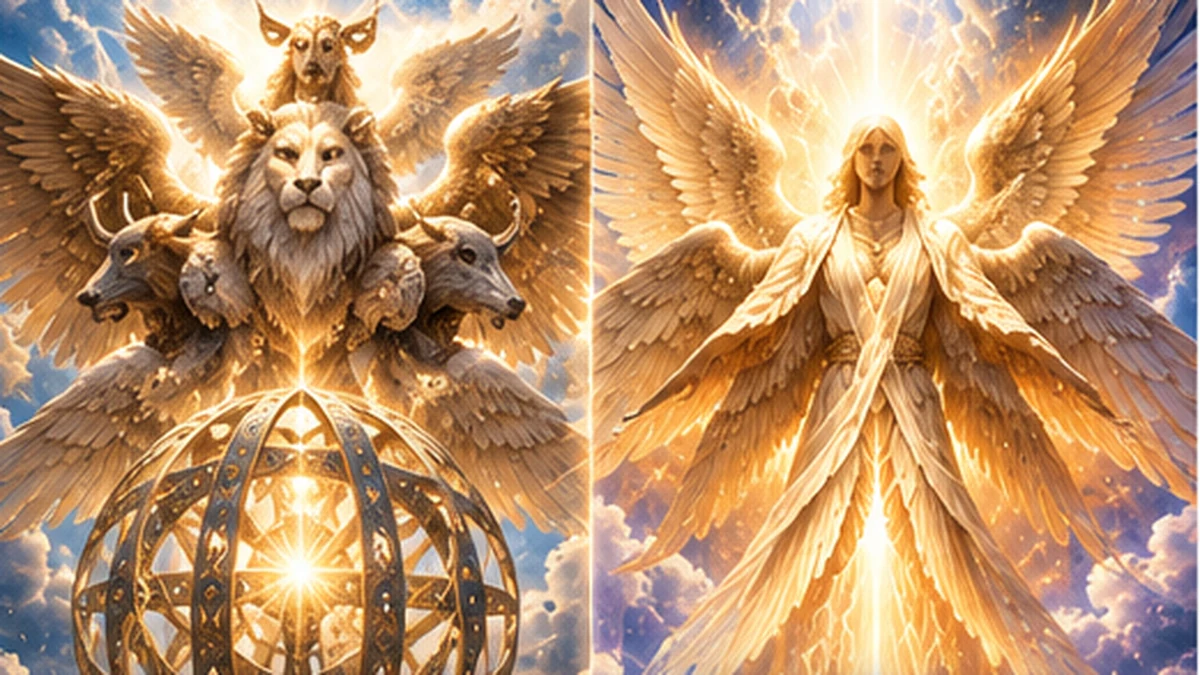
Ezekiel’s vision includes striking references to eyes and wheels. Isaiah’s seraphim are described instead by their six wings and worship. A viral illustration combining them should not be presented as one exact Bible quotation.
Why the cherubim guard Eden
Genesis 3:24 places cherubim at the way to the tree of life after humanity’s exile from Eden. The passage associates them with a guarded boundary, not with delivering ordinary messages to individual people. This theme helps explain their presence in Israel’s sanctuary imagery. The two cherubim fashioned for the ark in Exodus 25 belong to the symbolism of God’s dwelling among his people. Their role is therefore connected to sacred space, divine presence, and the limits of human access.
Why Ezekiel’s cherubim are unusual
Ezekiel’s vision unfolds in a prophetic setting with extraordinary descriptions of living creatures and wheels. Chapter 10 names the creatures as cherubim, which is why the chapters should be read together. Readers should be cautious about turning each detail into a literal biological anatomy chart. The text communicates divine glory and movement as well as the creatures’ appearance. A quick comparison with a Renaissance baby-cherub painting reveals how far later artistic conventions can drift from the passages.
What happens in Isaiah’s vision of the seraphim?
Isaiah sees the Lord enthroned, hears the seraphim proclaim divine holiness, and becomes acutely aware of his own unworthiness. One seraph touches his lips with a coal as part of the prophetic calling. The six wings are memorable, but the larger story concerns holiness, purification, and Isaiah’s commission. Reducing the passage to an answer about wings misses its central meaning.
How Revelation echoes both earlier visions
Revelation 4 includes heavenly living creatures, six wings, eyes, and a repeated declaration of holiness. Readers may notice similarities to Isaiah 6 and Ezekiel 1. Those literary connections are worth explaining, but they do not settle every question about the identity or rank of each creature. Some Christian commentators understand these scenes as connected images of heavenly worship. The safest answer distinguishes the clear echoes from the interpretive conclusions drawn from them.
What later angelic hierarchies add
Christian thinkers later organized heavenly beings into orders, often including cherubim and seraphim. Such systems can be important within Christian tradition, but they are not presented as a neat chart in Genesis or Isaiah. Readers asking ‘Which is more powerful?’ deserve an explanation of the difference between a biblical scene and a later theological hierarchy, rather than a confident ranking with no stated source.
Passage-by-passage reader reference
Cherubim and seraphim side by side
Cherubim: Genesis 3:24 places them at Eden’s boundary; Exodus 25:18–22 portrays them over the ark; Ezekiel 10 identifies the extraordinary living creatures as cherubim. Seraphim: Isaiah 6:2–7 describes six wings, praise, and the purification of the prophet’s lips. Both appear in contexts connected to divine holiness, but the texts give them different roles. Neither passage states a definitive contest of strength or a universal ranking of the two groups.
Why the number of wings is not a simple taxonomy
Isaiah explicitly describes six wings on each seraph. Exodus depicts wings on the ark’s cherubim, while Ezekiel’s vision includes four-winged living creatures. Revelation 4 combines features familiar from Isaiah and Ezekiel. Because these texts include symbolic visions and crafted sanctuary images, readers should not turn wing counts into an exhaustive classification of every heavenly being. The number matters within the particular passage.
Questions a good comparison should settle
Are cherubim babies? Not in Genesis, Exodus, or Ezekiel; that is a later artistic convention. Are seraphim named as Gabriel and Michael? No. Do both kinds of beings appear in every Christian angelic hierarchy? Some later systems include them, but the biblical passages do not provide a full nine-rank chart. Are the living creatures of Revelation exactly the same as those in Ezekiel? The scenes echo each other, but identifying every detail is an interpretive step.
Primary passages to read
Read the biblical passages in context before drawing conclusions from illustrations or later interpretations: Exodus 25:18–22; Isaiah 6:1–7; Ezekiel 10. These references identify the textual foundation; the article’s interpretive conclusions should be weighed against the full chapters.