Christian Fiction vs. Christian Nonfiction: Where Do Stories About Angels Fit?
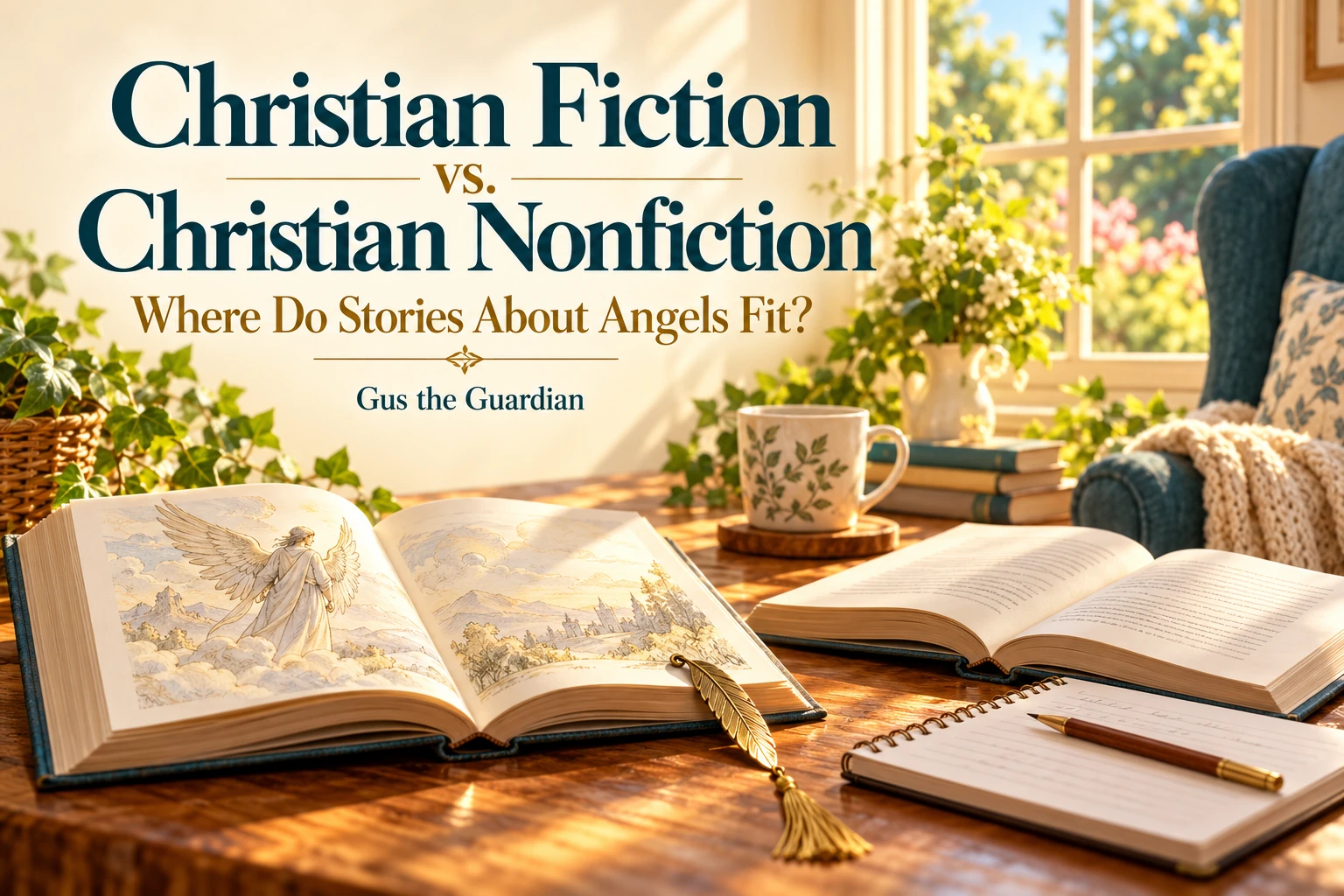
Christian fiction tells an imaginative story shaped by faith; Christian nonfiction presents teaching, reflection, research or accounts offered as real. Either can include angels. The difference is what the author is asking you to read as invented storytelling and what the author is presenting as a claim about life, history or belief.
That distinction helps when a search for “books about angels” returns a novel, a devotional, an encounter collection and a Bible study on the same screen. They may share a subject while offering very different reading experiences.
Choose by the kind of reading you want
- For a story: look for a novel, fictional characters, a setting, and a plot you want to follow.
- For a personal account: look for memoir or testimony, including an explanation of whose experiences are being described.
- For teaching: look for the subject, the author’s approach, the intended audience, and how sources are used.
- For a devotional: check whether the format centers on reflection, prayer, or short readings intended for regular use.
These are useful distinctions rather than sealed boxes. A memoir may include reflection. A novel may raise a thoughtful question. Read the description and introduction to see which purpose leads the book.
What does “Christian fiction” tell you?
It tells you something about the work’s relationship to faith, but it does not tell you the tone, age suitability, or style all by itself. Christian fiction can be comic, contemplative, suspenseful, historical or focused on ordinary community life. Readers also differ in how explicitly they want belief discussed in a story.
Publisher Tyndale maintains fiction and nonfiction as distinct parts of its publishing program. That is a useful reminder to look beyond the broad “Christian books” shelf. Within fiction, a sample will tell you much more about the voice than the category name alone.
Where does Gus the Guardian belong?
Gus the Guardian by Andrew Richards is a humorous, heartfelt family story with earthly adventures and heavenly conversations. Gus is the story’s imagined guardian character. His comic perspective belongs to the creative work; it is not presented as a transcript of angelic life or a source of Christian doctrine.
The Gus book introduction describes the family, faith and affectionate humor at its center. The free opening sample lets you hear that voice directly. Start there if your question is whether you would enjoy spending time with this particular guardian and family.
How nonfiction about angels asks a different question
The Billy Graham Library describes Angels: God’s Secret Agents as a book Graham wrote to explore angels and their roles. That stated teaching purpose differs from following an invented guardian through a comic scene. This is a comparison of the works’ stated purposes, not a firsthand review or a claim that every reader will share every interpretation.
When reading nonfiction, notice how the author moves between Scripture, interpretation, tradition and personal accounts. A remembered experience and a cited biblical passage provide different kinds of information. You can appreciate a testimony while still asking exactly what claim the writer is making.
Can fiction be meaningful without being a factual guide?
Yes. A story can give you a memorable way to think about care, responsibility, forgiveness or family affection through its characters and events. That does not turn its invented conversations into quotations from Scripture. Enjoying a scene and checking a theological claim are different reading activities, and both can have a place.
If a Gus moment makes you curious about the biblical subject, our guide to what the Bible says about guardian angels identifies passages separately from the fictional story. Keeping that distinction visible lets you explore each kind of writing on its own terms.
A quick check before you choose
Read the subtitle, category, description, introduction and a short sample. Ask: “Am I looking for an entertaining story, a real-life account, or an explanation of belief?” Then ask whether the book actually offers that experience. A winged figure on the cover cannot answer either question for you.
For several different kinds of faith-centered storytelling, explore our six-book Christian fiction guide. If you plan to share a book aloud, preview it for the people who will be listening rather than relying on the word “Christian” as an age or content rating.
Sources and editorial note
Tyndale: publishing purpose and categories · Billy Graham Library: the purpose of Angels: God’s Secret Agents. Gus descriptions are based on this website’s book introduction and opening sample. Category comparisons and selection questions are editorial guidance, reviewed October 26, 2026. Andrew Richards is the author of Gus and this website.